

The Violet Spray Bottle in My Sister's Letter, and the Seven Porch Steps
A retired Houston librarian writes her sister letters about the heat, the oak pollen and the air, until one comes back with a violet bottle inside. The label, the research and the return terms, read like a catalog card.

First, the people: Corinne Haskell is a pen name. Birdie, Tessa, Gus Delacroix and the porch on our street are composites, the way letter columns have always been written.
Everything about the bottle itself, its label, its price, its directions, its reviews and its return terms comes from the seller's own pages, read in October 2026.
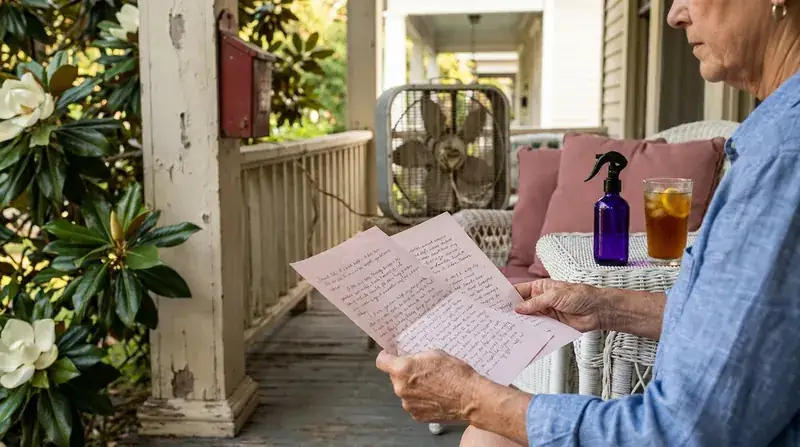 The 3 o'clock letter
At three o'clock on a Thursday in May, the mail carrier came up our walk with a padded envelope and my sister's handwriting slanting across the front like it was leaning into a Lubbock wind.
I was in the porch chair with the box fan going and a glass of tea sweating a ring onto the wicker table. I remember that I had to stop on the fourth step to take it from him, and that I pretended I was only looking at the stamp.
I'm sixty-six. I spent forty years as a reference librarian at a neighborhood branch here in the Heights, and the main thing that job teaches you is how to be quiet in a room full of people.
It also teaches you to read the whole thing before you form an opinion. So this column is a letter about a letter, and about a small violet bottle that came folded inside one, read the way I'd read anything a patron brought to my desk.
If you have ever stopped on a staircase and pretended to admire something, you'll know most of this already. You just haven't seen anybody catalog it.
Forty Years of Keeping Quiet Between the Shelves
The branch where I worked was built in the 1920s, all tall windows and oak shelving and a reading room that smelled like paper and floor wax. In August the air handler ran so hard you could hear it humming under the card catalog.
People think a library is silent. It isn't; it's quiet, which is different, and a reference librarian learns to listen to the quiet the way a sailor listens to weather.

I used to say the air was my coworker. When I was by myself at the desk at closing time, the only sounds were the clock, the air handler and my own breathing.
That's a strange thing to admit, but I think a lot of people who work in quiet rooms would say the same. After enough years you know the sound of your own breath the way you know your own handwriting.
I knew mine when it was easy. I knew it after I'd carried a cart of encyclopedias up the mezzanine stairs, and I knew it, for twenty-five years, as the cough of a woman who smoked.
I started smoking at nineteen, because everybody in my dormitory did, and I stopped at forty-two, the week my granddaughter Tessa was born. I wasn't about to be the grandmother who smelled like an ashtray in her baby pictures.
The cough faded over the following years, the way a stain fades from a tablecloth: not all at once, and never quite as completely as you'd like. Most mornings after that, I didn't think about it at all.
Then I retired, and the house got quiet in a new way. And in the new quiet I started hearing things the library air handler had been covering up.
Houston Air, Explained to a Sister in Lubbock
My sister Birdie lives in Lubbock, five hundred miles and an entirely different sky away. Her real name is Bernadette, she's seventy, and she played the organ at the same Methodist church for thirty-eight years.
We have written each other letters every week since 1979, when I moved to Houston for the library job and long distance cost more than either of us could justify. Real letters, on paper, with stamps, every single week for forty-seven years.
Our phones work fine now, and we text like everybody else. But the letters are a different thing; you say slower things in a letter, and you say them better.
Birdie's letters are about dust. In Lubbock the wind picks up the whole county some afternoons and moves it to the next county, and she writes about wiping red dirt off the piano keys.
Mine are about water. Houston air isn't air so much as soup, and from May to October you step out of the front door and it closes around you like a warm towel.
And in March it's about the oaks. Every spring the live oaks and water oaks along our street let go of their pollen all at once, and for three weeks every car on the block wears a yellow-green coat.

I wrote Birdie a whole letter about the pollen this past March. I told her you could draw a picture on the windshield with your finger, and that Gus Delacroix across the street had written WASH ME on his truck and then laughed so hard he had to sit down on the tailgate.
I didn't tell her the rest of it. The rest of it was that I'd been noticing my chest in the mornings, a kind of tightness, like a cardigan buttoned one button too high.
It wasn't anything big, and that's exactly why I didn't write it down. A librarian is trained to catalog things that are definite, and this wasn't definite; it was a feeling I had for twenty minutes after coffee and then forgot about.

The box fan is a character in this story, so I should introduce it properly. It's a metal box fan from the 1980s that Lyle, my late husband, bought at a hardware store on 19th Street, and it has run on our porch every summer since.
It hums in a particular key. On bad mornings that spring, I'd sit next to it with my coffee and notice that I was breathing slightly faster than the fan was turning, if that makes any sense at all.
The Cough I Carried for Twenty-Three Years
I should say more about the smoking, because a column like this owes you the whole record. I smoked a pack a day for most of twenty-three years, menthols, the long ones, bought by the carton at a gas station on Shepherd Drive.
I smoked on the library's back loading dock with the custodian and two of the pages, in the days when that was allowed. We called it the reading room, and we thought that was very funny.
The cough came in my thirties. It was a morning cough mostly, the kind you clear in the bathroom with the faucet running so nobody hears, and by my late thirties it had its own schedule.
Lyle never once nagged me about it. He'd just open the kitchen window an inch whenever I lit one, and he did it so gently and so faithfully that it worked better than any lecture would have.
When I quit, the week Tessa was born, I quit cold, and it was the hardest thing I'd ever done. For a year I carried a roll of peppermint candies in every cardigan pocket and chewed through them during story time.
That's the strange thing I didn't notice until Birdie's bottle came: peppermint has been my companion for twenty-four years. It was the taste of the hardest thing I ever did right.
The cough faded over the next few years, and by fifty I'd mostly forgotten it. My clinician hasn't forgotten, though; it's in my chart, and it's the first thing he mentions every time the cold disc goes on my back.
I'm telling you this so you know who's writing. I'm not a woman who never smoked, wondering about her breathing; I'm a woman with history, who quit, and who listens a little harder than most people do.
Seven Porch Steps and a Hand on the Rail
There are seven steps from our front walk up to the porch. I know because Lyle repainted them every other summer, and he always counted them out loud while he did it, as if one might have wandered off since last time.
I have climbed those seven steps maybe forty thousand times. That spring, I started stopping on the fourth.

It wasn't a big stop. I'd put my hand on the rail, look at the ferns in the hanging baskets as though one of them had done something interesting, and then go up the last three.
The first few times I told myself it was the grocery bags. Then I caught myself stopping with nothing in my hands but the mail, and I had to admit the ferns hadn't done anything interesting in years.
I did the librarian thing after that. I started a list on an index card I kept in my apron pocket: the date, how many stops on the steps, and how many on the walk to the corner mailbox.
The corner mailbox is the blue one where I post my letters to Birdie, two blocks down, past four old iron lampposts the city painted green a long time ago. On a good day in my fifties, I'd have walked there and back without thinking about it.
That April, I was stopping at the second lamppost and the third. I'd pretend to read the flyers stapled to them, for lost cats and garage sales, and then walk on.
I didn't put any of this in a letter. I wrote Birdie about the pollen and the church rummage sale and a mystery novel I'd liked, and I mailed the letter from the blue box with two lamppost stops on the way.
What My Clinician Listened To
In late April I went in for my yearly visit. My clinician is a thoughtful man about my son's age who listens more than he talks, which I appreciate in anybody.
I told him about the cardigan feeling in the mornings and the fourth step and the lampposts. I'd brought the index card, and he read it with the kind of interest librarians never get from anybody.
Then he put the cold disc of the stethoscope on my back and asked me to breathe in and out, slow, the way they always do. I remember counting the ceiling tiles while he moved it, eleven places on my back and four on my chest.
When he was finished, he sat down on his rolling stool and told me what he'd heard in plain words. He said I sounded like a woman who'd smoked for twenty-three years and then quit for twenty-four, and that the second number was the one he cared about more.
He ordered a breathing test, the kind where you blow into a tube as hard and as long as you can, and the results came back the following week. He said they were reasonable for my age and my history, and he wrote down three things for me to do.
Walk every day, even when it's hot, early or late; watch the air-quality days the city posts in summer; come back in six months, sooner if anything changes.
That's all. He didn't give me anything new to take, and he didn't tell me anything was wrong that needed fixing; he told me to keep moving and keep watching.
I was relieved, and I was also a little lost. A librarian likes a reading list, and "walk and watch" isn't much of one.
I drove home and sat on the porch next to the box fan and wrote Birdie a letter. And for the first time in forty-seven years of letters, I told her about my breathing.
Four Pages to Lubbock
It came out to four pages, which is long even for me. I told her about the fourth step and the lampposts and the cardigan feeling and the cold disc on my back.
I told her the clinician's three instructions. I told her I'd started walking in the evenings when the heat broke, and that Gus sometimes walked with me as far as the corner because his knees wanted the exercise too.

And I told her the thing I hadn't said out loud to anyone. The quiet of the house had started to feel like the library at closing time, except now the only breathing I could hear was mine, and I didn't like how carefully I was listening to it.
I posted the letter from the blue box on a Monday. I stopped at the third lamppost, and I pretended to read a flyer about a lost orange cat named Biscuit.
Birdie doesn't text back about letters. That's one of our rules: a letter gets a letter.
So I waited, the way we've always waited, and in the meantime I walked in the evenings and kept my index card. Ten days later, the mail carrier came up the walk with the padded envelope.
A Small Violet Bottle Wrapped in Pink Stationery
I opened it at the wicker table. Inside was a letter, three pages in Birdie's big organist's handwriting, folded around something hard and small and wrapped in a paper napkin from the cafeteria near her church.
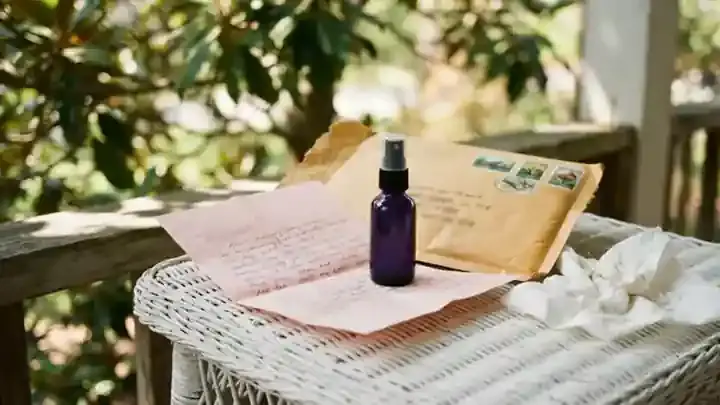
It was a spray bottle, about the size of a lipstick and a half, made of glass so dark violet it looked almost black until you held it up to the light. On the green label was a word I'll come to, and on the napkin, in Birdie's hand: "the perfume of the chest."
I laughed out loud on the porch, by myself, the way you only laugh at something your sister wrote. Gus looked up from his truck across the street, and I waved the napkin at him like a flag.
I read that page four times before supper. Then I did what I always do with something a patron hands me: I put the bottle in the kitchen drawer with the good scissors and decided to read up on it before it went anywhere near my mouth.
Did it come? Don't you dare answer with a letter, I'll be dead by then.
6:12It came. It's in the drawer with the good scissors until I've read the label.
6:15Of course it is. Read it, then spray it, then write me.
6:16In that order. Thank you, Bernadette.
6:18She broke our rule, and I broke it back. Some evenings a sister is worth a text.
Why an Organist Trusts Her Alto Section
That Sunday we talked on the phone, which we do maybe once a month, and I asked her where the bottle had really come from. Birdie's answer was simpler than I expected.
The lady in the alto section is named Eunice, and she's eighty-one. Eunice keeps the bottle in her purse next to her reading glasses, and before the long anthems she turns her head toward the stained glass, gives it a few sprays and breathes in like she's smelling a rose.
"I asked her what it was," Birdie said. "She told me it was mint and plants and a little ritual, and that she'd never once claimed it did anything but make her feel ready to sing."

I liked Eunice immediately for that sentence. A woman who'll tell you exactly how little she claims about something is a woman you can believe about the rest.
Birdie said she'd bought two bottles from the company's website after church, read the label at her kitchen table, and called the phone number on the bottom of the page to ask a question about it. A person answered, she said, in Houston, which made her laugh, because that's where I live.
"So the bottle was coming to you one way or the other," she said. "I just put a stamp on it."
Then she said the thing I've thought about every day since.
"You told me you were listening to yourself breathe in that quiet house. I thought maybe you'd like something that sounds like a little noise in the afternoon."
How a Reference Librarian Reads a Label
At the library, when a patron brought me a book or a pamphlet and asked whether it was any good, I had a method. I'd fill out an index card the way a cataloger does: what it is, who made it, what it says about itself, and what other sources say about it.
Four lines, and the fourth line was always the shortest. In forty years I learned that the fourth line is where most things fall apart.
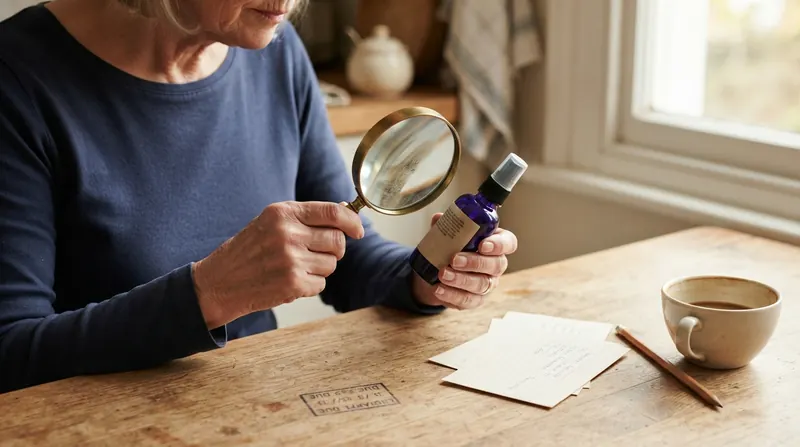
So I took the violet bottle out of the scissor drawer, got the brass magnifying glass Lyle gave me for our thirtieth anniversary, and sat down at the kitchen table with a fresh pack of three-by-five cards. Here's what the cards said.
Card one: what it is. A one-fluid-ounce glass spray bottle of plant extracts in vegetable glycerin and water, sold as a dietary supplement.
The company calls the way it's made "Raw Herbal Extract," and says the plants are extracted "without heat, alcohol, or harsh chemicals." That matters to me only because it means there's no alcohol sting when you spray it; it tastes like sweet mint, not like mouthwash.
Card two: who made it. A company called Global Healing, at 1242 N Post Oak Rd, Suite 100, Houston, Texas 77055, with a toll-free phone number, 1-800-476-0016, printed on its pages.
I'll be honest that the company's name made my librarian eyebrow go up. A name is a name and not a finding, the same way a book called "Easy French" doesn't make French easy.
But a street address eleven miles from my porch and a phone line a person answers both count for something on a catalog card. I've filed a lot of pamphlets from companies that printed neither.
Card three: what it says about itself. This is the card where I had to be careful, because the company's own product page uses a lot of confident language I'm not going to repeat.
I'll put it plainly. The product page talks about the bottle in big, warm, sweeping terms, and a catalog card isn't a place for big, warm, sweeping terms; it's a place for what you can check.
What I could check was the label itself and the directions. The directions say, word for word: "Spray in mouth, inhale deeply three times, then swallow remaining liquid."
And under that: "Adults & Children Ages 6+: Use 6 sprays, three times daily or as recommended by your healthcare provider." Younger children, ages three to six, are listed at three sprays.
At the bottom of the page, in the small type I've read on ten thousand book jackets, was the sentence that outranks all the others. "These statements have not been evaluated by the Food and Drug Administration."
The next line says the product is not meant to stand in for medical care. I copied both sentences onto card three in full, and I underlined them twice.
The Supplement Facts, Line by Line
The back panel, which the company also shows as a picture on its website, is short. That's the first thing I liked about it.
It lists a serving size of six sprays for adults and children six and up, and three sprays for children three to six. It says the bottle holds "about 42" adult servings, and "about 84" of the smaller ones.
Then there's one line: a "Proprietary Blend" of 0.70 milliliters per adult serving. That's a little more than a tenth of a teaspoon, divided among ten plant ingredients the label doesn't measure out one by one.
I don't say that to scold anybody. Plenty of herbal products print a blend instead of individual amounts, and the label says plainly that a Daily Value isn't established.
But a librarian notes it on the card, because it means nobody can honestly compare this bottle to any study of any single plant. When you don't know how much of something is in a spray, you can't borrow the results of a trial that used a measured amount of it.
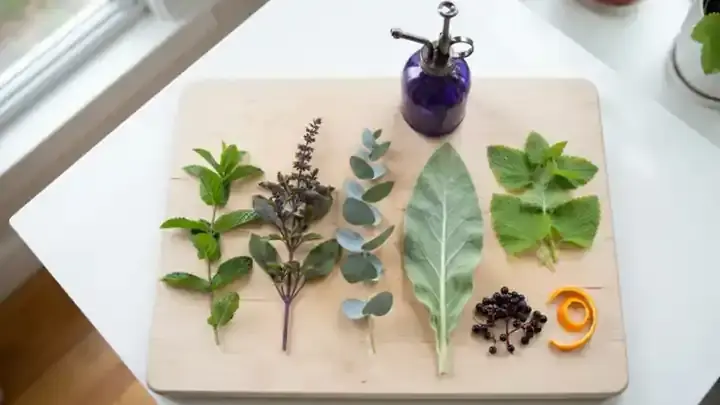
Here are the ten, in the order printed: organic peppermint, organic tulsi, organic eucalyptus, organic mullein, organic lemon balm, organic elderberry, organic orange, organic lovage, organic peppermint oil extract and organic menthol.
Under "Other Ingredients," it lists organic vegetable glycerin, which is what makes it sweet and a little thick on the tongue. It also lists two phrases I had to look up: "triple-distilled biophotonic structured water" and "ormus supercharged minerals."
I spent most of a morning on those two phrases, in the reference books I still keep and the databases I still know how to search. I couldn't find a definition of either one that I'd be comfortable citing to a patron.
So here's how I filed them, honestly and without any mockery. I read them as water, glycerin and a marketing sentence, and I don't credit them with anything on my card.
The label also carries the USDA Organic seal and the Non-GMO Project seal, and the website says the formula is vegan and gluten-free. Those tell you how the plants were grown and handled, which I appreciate, but they're not evidence that anything in the bottle does anything.
What Other Sources Say About the Plants
Card four: what other sources say. This is the short card, the one where most things fall apart, so I did it slowly, plant by plant.

I want to say first what I didn't find. I didn't find a single study of this bottle; no trial has ever tested this blend of ten plants in glycerin, and the company doesn't claim one exists.
That's an important sentence, and I'm going to repeat it in plainer words. Nobody has tested this spray, so any research I tell you about is research on one plant, in a different form and amount, in somebody else's study.
Mullein is the soft, fuzzy-leaved plant that grows along Texas roadsides with a tall yellow flower spike, and it's fourth on the label. A 2021 review of its folk uses described a long tradition of using mullein for coughs and hoarseness, and noted that its leaves and flowers are full of soft mucilage. [1]
That same review was honest that most of what it gathered is tradition and laboratory work, not trials in people. So mullein goes on my card as "a long tradition, a plausible reason people liked it, and very little testing in humans."
Eucalyptus is third, and it's the smell everyone recognizes from cough drops and steam rooms. Its leaves contain a compound called cineole, which has been studied in small clinical trials related to the airways, and the government's own summary says eucalyptus leaf hasn't shown strong clinical evidence as a supplement. [2]
Small trials of one compound, in a different form, and no strong evidence for the leaf as a supplement. That's what a fair card says, and that's what mine says.
Elderberry is sixth, and I was glad to find the government had written a plain page about it. The National Institutes of Health's complementary-health center says the evidence for elderberry is limited, and it uses a phrase I liked so much I wrote it on the back of the card. [3]
There is insufficient evidence to know.
— NIH National Center for Complementary and Integrative Health, Plain-language summary on elderberry[3]
I respect that page enormously. A government office that will print "insufficient evidence to know" about a famous berry is an office I'll believe on other things.
Lemon balm is fifth. It's a lemony member of the mint family that grows like a weed in Birdie's yard, and the only study about it in the files I trust was done on twenty healthy young adults and looked at attention and memory, not breathing at all. [4]
I put it on the card anyway, so nobody can say I hid it. A study of college students taking a measured extract and doing memory tests has nothing to tell a sixty-six-year-old woman about her porch steps.
Peppermint and menthol are first and last, and they're what you taste. The only menthol studies in my file are about menthol rubbed onto sore muscles on the skin, which is a completely different thing from a sweet mint spray in your mouth. [5]
Tulsi, second on the label, is holy basil, a clove-scented cousin of garden basil with a long place in Indian households and kitchens. Lovage is a tall celery-flavored garden herb, and orange is orange; I found no study I'd quote for any of the three in a spray like this, and they go on the card as label ingredients and nothing more.
The Question the Company Answered in Writing
There's one more thing that went on card four, and it's the thing that finally got the bottle out of the scissor drawer. It was in the questions-and-answers section at the bottom of the company's own product page.
A customer had asked, in plain words, whether the spray would help with a lung condition that has a name, the kind a clinician diagnoses with a breathing test. Another customer had asked the same question about a different named condition.
The company answered both in writing, on its own page, where anybody can read it. It wrote that it doesn't have research to suggest the spray helps with that first condition, that it isn't intended for the second, and that customers in those situations should check with their healthcare provider.
I sat back in my kitchen chair when I read that. In forty years of patrons bringing me pamphlets, I could count on one hand the companies that wrote, in public, what their product was not for.
It doesn't make the bottle do anything. But it told me the people who answer that page would tell me the truth when the truth wasn't flattering, and that's the most useful thing a catalog card can hold.
The same answers mention, more than once, that the purchase is covered by what the company calls a "one-year money-back guarantee." I'll come back to that, because a librarian always reads the return policy before the first chapter.
And there was one more question I was glad somebody asked. A customer wanted to know whether the liquid could go in a nebulizer, the machine some people breathe medicine through, and the company's directions make it plain that the spray is meant for the mouth only.
That's a good thing to know. This is a sweet mint spray you take into your mouth and breathe in over, not anything that belongs in a machine, and not a replacement for anything your clinician has given you.
The Ritual on the Porch, Step by Step
I called my clinician's office before I opened the bottle, because Birdie told me to and because I'd have told any patron the same. His office called back that afternoon; I read them the ten plants and the directions, and they said he'd see no reason a mint spray should interfere with anything I was doing.
Then I took the bottle out to the porch at three o'clock, turned the box fan down to low, and did exactly what the label said.
Step one: shake it a little. The label doesn't say to, but it's a plant liquid, and in forty years I've never met a liquid that didn't settle.
Step two: six sprays into the mouth. The sprayer is a fine mist pump, and each press puts a cool, sweet little cloud on your tongue, so six presses take maybe five seconds.
Step three: inhale deeply three times. This is the part Eunice in the alto section does toward the stained glass, and I did it toward the magnolia tree.
You breathe in slowly through your mouth over the mint, all the way down, and let it out through your nose. Three times, slow, the way my clinician asked me to breathe with the cold disc on my back.
Step four: swallow what's left. It's maybe a tenth of a teaspoon, sweet from the glycerin, and it's gone before you notice.

The taste, since everybody asks. It's mint first, cool and sweet like the inside of a peppermint patty, and then something greener and slightly medicinal underneath, which I take to be the eucalyptus.
There's a faint orange at the very end, if you're paying attention, and I always am. Tessa tried it at Easter and said it tasted "like a candy cane that went to college," which I've decided is a compliment.
Then I drank a glass of tea, because it was three o'clock in Houston in May and that's what you do. I wrote the date on an index card, and I wrote one word next to it: "minty."
Nine, Three and Nine
The label says three times a day, so I needed three times that a retired woman would actually remember. I picked them the way I used to pick shelving times at the branch, by tying them to something that already happens.
Nine in the morning, after the coffee and before the newspaper. That's the cardigan-buttoned-too-high time, and I liked giving it something to do besides worry.
Three in the afternoon, on the porch, when the mail comes. That's the one I think of as the real ritual, the one Birdie wrote about on the napkin.
Nine at night, after the evening walk, before I take my book to bed. By then the heat has broken, the street is quiet, and the box fan has been switched off for the day.

I kept the bottle on the wicker table during the day and on the nightstand at night. It's small enough to drop in a cardigan pocket, which I did on Sundays.
That chart is the first thing I'd want a patron to see. At the adult directions, one bottle is two weeks, not a month, and it's better to know that before you order than after.
Five Things This Bottle Is Not
A good catalog card has a "see also" line and a "not to be confused with" line. Here's the second one, because I think it matters more.
It isn't an inhaler. It doesn't go into your lungs as a measured mist; it goes onto your tongue, and you breathe in over it, the way you'd breathe over a cup of peppermint tea.
It isn't for a machine. The company's directions say to spray it in your mouth, and its answer about a nebulizer made that plain.
It isn't something you swallow with a glass of water. There's nothing to swallow but a tenth of a teaspoon of sweet liquid, which I'll admit was part of the appeal for a woman whose kitchen windowsill already holds enough little bottles.
It isn't a replacement for anything your clinician gives you. If you use something from your clinician for your breathing, that comes first, and this bottle doesn't even get a vote.
And it isn't a promise. The company says so in its own small print, in its own answers to customers, and I say so here.
What the Reviews Actually Say
At the library, if a patron asked whether a book was good, I'd show them the reviews, the good ones and the bad ones, and then I'd tell them what kind of reviews they were. So that's what I did with this bottle.
The company's page shows an average of 4.5 stars from 597 reviews. That's a lot of voices for a small violet bottle, so I did what I'd do with any big number: I asked how it breaks down.
Most of the 597 are five stars, and 48 of them are one or two stars. I'd distrust a page that showed me none of the 48, and this one shows them.
There's one more thing a librarian would tell you about these reviews, and I want to say it plainly. As far as I can read the store's own review data, the reviewers were offered loyalty points by the store for writing them, the three I'm about to quote included.
That doesn't make them false. It makes them a particular kind of voice, the voice of a customer who was thanked for speaking, and you should weigh them the way you'd weigh a blurb on the back of a book.
Here are three, word for word, including the one I'd have put first if I were the company and wanted to be trusted.

Beautiful Spray !!!.......Works Great !!!

My lung Health supplement is going well. I like the taste and texture. I am still on the first bottle and looking forward to its full effects.

I have not noticed any difference yet.
Read Gary's twice, because it's the most honest two stars I've ever seen. "I have not noticed any difference yet."
That's a complete review in eight words. No anger, no exclamation points, no story; just a man who tried something and reported back accurately.
I looked to see what the company did with Gary, and I liked what I found. It answered him in public, said it can take time, invited him to call, and reminded him the purchase was covered by its one-year guarantee.
Michelle's is the one I'd want my sister to read, for two short lines: "I like the taste and texture. I am still on the first bottle."
She's describing a flavor and a habit, which is exactly what this bottle is, and she's honest that the rest is still ahead of her.
And Halle's is pure enthusiasm, with more punctuation than a church bulletin. I quote it exactly as written because that's the rule; a reviewer's exclamation points belong to the reviewer.
The portraits next to these three reviews are illustrations, not the reviewers. The words are theirs, exactly as published, and the photographs are only there so the page doesn't look like a tax form.
Eight Weeks on the Porch, Written Down
I promised Birdie I'd write her back, and I promised myself I'd keep the index card honest. So for eight weeks, four bottles, I wrote down the same three things every evening.
The number of stops on the seven porch steps, the number of lampposts I stopped at on the walk to the blue box, and one word about the day.
I also kept walking every evening, because that was my clinician's instruction, and I want to be clear about it from the start. Whatever my index cards show, they show a woman who walked every evening and sprayed a mint spray three times a day, and I cannot tell you which one did what.
Corinne's index cards, late May to late July
- Week 1Sprayed at nine, three and nine six days of seven; forgot the nine p.m. once. Steps: one stop most days, on the fourth. Lampposts: stopped at two. Word of the week: "minty."
- Week 2Nothing. Same fourth step, same two lampposts, same cardigan feeling after coffee. Wrote "nothing" five days running and nearly mailed the bottle back to Lubbock.
- Week 3An ozone day the city posted in early June; stayed in and walked the hallway instead. First note in the margin: "looked forward to three o'clock." Started the second bottle.
- Week 4Gus walked with me four evenings. Lampposts: stopped at one, the third, most days. Steps: some days none, some days the fourth.
- Week 6Walked to the blue box and back without stopping at a lamppost three evenings out of seven. Steps: no stop on four days. Word: "porch."
- Week 7Tessa visited for the long weekend; no walks, a birthday cake and two late nights. Wrote "away from the cards" and didn't scold myself.
- Week 8Back to my clinician with the cards in my tote bag, and the fourth bottle half full on the wicker table.
I want to slow down on week two, because it's the week most people quit. Five cards in a row that say "nothing," in the handwriting of a woman who already suspected she'd been talked into a candy cane.
I nearly mailed it back. I had the padded envelope out on the kitchen table and Birdie's address half written when I stopped and asked myself what I'd tell a patron who wanted to return a book on page forty.
I'd tell them to read one more chapter. So I read one more chapter, and I'm glad, not because anything remarkable happened in week three, but because week three is when I started looking forward to three o'clock.
That's the honest center of this whole column. The thing I noticed first wasn't my breathing; it was that the quiet house had a small noise in it at three o'clock, a cool sweet cloud and three slow breaths, and that I liked it.

The ozone day in week three taught me something too. The city posts air-quality alerts in summer, and my clinician had told me to watch them, so on that June morning I stayed in and walked the hallway twenty times instead.
I sprayed at three o'clock by the front window instead of on the porch, and it wasn't the same. I've thought about why, and I think the porch was half of the ritual all along.
Week four was Gus's week. He walked with me four evenings in a row, talking the whole time about his late wife's tomato plants, and on two of those evenings I stopped only at the third lamppost.
I'd like to tell you the spray did that. The truth is that Gus walks slowly, talks constantly and makes you forget to count, and I can't separate any of it.
Week six is the one I wrote Birdie about. Three evenings out of seven, I walked to the blue box and back without stopping at any lamppost at all.
I want to be as careful here as I'd be with a patron's research question. By week six I'd been walking every evening for more than two months, the spring pollen was long gone, and I'd also started taking the steps slower on purpose, one hand on the rail.
Any of those could be the reason, or all of them together. The index card only says what happened, not why, and I'm not going to write a "why" on it that I can't support.
Week seven, Tessa came for the long weekend, and there were no walks and no cards and a lot of birthday cake. I wrote "away from the cards" on the card for the week, and I didn't feel the least bit guilty.
Week eight, I went back to my clinician with all of it in my tote bag: fifty-six index cards held together with a rubber band. He read every one, which nobody has done with my handwriting since my library school professors.
He listened to my back again, eleven places and four on the chest. He said I sounded about the same as I had in April, which he called good news for a woman with my history, and he said the walking was the thing he'd keep doing if he were me.
Then he asked about the spray, and I showed him the bottle and the four cards. He read the label through his glasses, said he didn't see anything in it that worried him, and said if I liked my three o'clock ritual, I should keep it, as long as I kept walking too.
That's the whole result. I'm not going to dress it up: a woman who walks every evening and enjoys a mint spray on her porch, whose clinician says she sounds about the same, and that's good news.
Grandma, Aunt Birdie says you've been keeping index cards about a candy cane.
8:40About a mint spray, my steps and the lampposts. Fifty-six cards so far.
8:52Of course you have. Are the lampposts winning?
8:53Three nights this week I didn't stop at any of them. I walked every night too, so don't you dare credit the candy cane.
8:55Ada, it's Corinne Haskell; may I read you the ten plants on a mint spray my sister sent?
10:14Of course. Read me all ten, plus the other ingredients, and tell me everything you take daily.
10:31Peppermint, tulsi, eucalyptus, mullein, lemon balm, elderberry, orange, lovage, peppermint oil, menthol. Glycerin and water.
10:33Nothing there I'd stop you over with your list. Keep your clinician in the loop and bring the bottle by if anything changes.
10:40I've included that exchange because it's the step most people skip. Read the ten plants to your pharmacist out loud; it takes two minutes, and it costs nothing at any pharmacy counter I've ever stood at.
Reader Letters About the Spring Column
I wrote a short version of the spring for the newsletter of the Friends of our branch library, the one that goes out with the book-sale flyer. More readers wrote back than I've ever had write back about anything, including the column on overdue fines.
The comments above are illustrative, assembled from the kinds of letters our readers send. I've kept Leonard's on purpose, because a column that only prints happy letters isn't a column; it's a flyer.
Two Sisters, One Violet Bottle and Forty-Seven Years of Letters
In August, Birdie came to Houston for ten days, the first time in four years. The Friends of the library asked if we'd record a conversation for their newsletter's audio page, and we did it on my porch with the box fan off and two glasses of tea sweating on the wicker table.

Friends of the Branch · The Porch Tapes, Episode 7
Two Sisters, One Violet Bottle and Forty-Seven Years of Letters
Corinne
host
Bernadette, the newsletter wants to know why a retired church organist mailed her sister a spray bottle inside a letter instead of just calling her.
 Birdie
guest
Because you'd written me four pages about listening to yourself breathe, and that's not a phone call. A letter that long deserves something in the envelope.
Corinne
host
You know I put it in the scissor drawer for a week before I sprayed it once.
Birdie
guest
I'd have worried if you hadn't. You've been reading the small print on everything since you were nine, including the back of the cereal box at breakfast.
Corinne
host
So tell the people what you actually expected it to do, because I have fifty-six index cards and I'd like to compare notes.
Birdie
guest
Honestly, I expected it to give you three o'clock back; Eunice in my alto section says it makes her feel ready to sing, and she's never claimed one thing more than that. You'd gone so quiet in your letters that I thought a little ritual might help, and the walking was always going to be your clinician's department.
Corinne
host
Three o'clock is exactly what it gave me; the lampposts I'm still crediting to the walking and to Gus's tomato stories.
Birdie
guest
Then that's the honest version, and you should print it that way. And tell them to call the number on the bottle with their questions, because a woman in Houston answered mine, two miles from your porch practically.
She's wrong about the two miles; it's eleven. But she's right about everything else, which has been the arrangement since 1956.
The Numbers, on One Card
If you've read this far, you're a catalog-card reader too, so here are the numbers in one place before the button. I'd rather you see them together than go hunting.
1 fl oz spray · 14 days at the adult directions · read the return terms below before ordering
The Return Terms, Read Like a Due-Date Slip
Now the part most columns skip, and the part I always read first at the branch: what happens if it doesn't suit you. A library is, after all, a building full of things you're allowed to bring back.
I want to be plain, and I want to quote rather than summarize. In its answers to customers on its own product page, the company describes the purchase as covered by a "one-year money-back guarantee."
It repeats that in its public reply to Gary, the two-star reviewer, offering to help him with a return. The footer of the product page also lists a "Satisfaction Guarantee," and the page says the spray qualifies for HSA and FSA accounts.
Here's what I'd actually do, as a woman who spent forty years telling patrons to check out one book before they bought the whole series. Order one bottle, use it for its full fourteen days, keep an index card, and decide then.
Fourteen days is enough to find out whether you're a Michelle or a Gary. If you're a Gary, the company has said in writing what it will do, and you'll have its phone number on the bottom of the bottle.
One more note from the due-date desk. Keep the box and the packing slip until your fourteen days are up, and write the date you opened the bottle on the label with a pen, the way I used to stamp the inside cover of a returned book.
It sounds fussy, and it is. But in forty years at a circulation desk I learned that nobody has ever regretted keeping a receipt, and that a written date settles more arguments than a good memory.
Before you return anything, though, call them and confirm how the policy works for you. I've learned that a five-minute phone call with a person beats an hour of reading fine print, and I say that as someone who loves fine print.
Questions Birdie Gets at Choir Practice
Short answers to the questions people ask about the violet bottle
How do you use it?
Six sprays into the mouth, inhale deeply three times, then swallow what's left, three times a day for adults and children six and up, per the label; children three to six use three sprays. I use nine in the morning, three in the afternoon on the porch, and nine at night.
What does it taste like?
Sweet mint first, a greener eucalyptus note underneath and a hint of orange at the end. The glycerin makes it sweet and slightly thick, and the company says there's no alcohol in it.
How long does a bottle last?
About 42 adult servings, which is 14 days at the label's directions, as the company's own answer confirms. For a child three to six, about 84 small servings, or 28 days.
Is it an inhaler or something for a nebulizer?
No, it's a spray you take into your mouth and breathe in over. The company's directions are for the mouth only.
Will it change my breathing?
Nobody honest can promise that, and the company's own small print says its statements haven't been evaluated by the Food and Drug Administration. My index cards show a woman who walked every evening and sprayed three times a day, and I can't tell you which did what.
Can I use it if my clinician already gave me something for my breathing?
Ask your clinician first, by name, and read the ten plants to your pharmacist. Whatever your clinician gave you comes first; this bottle doesn't replace anything.
Who sells it, and how do I reach them?
Global Healing, 1242 N Post Oak Rd, Suite 100, Houston, Texas 77055. Phone 1-800-476-0016; email [email protected].
Who I'd Hand This Bottle To, and Who I Wouldn't
At the reference desk I learned that the most useful thing you can tell a patron isn't "this book is good." It's "this book is good for you, and here's who it isn't for."
It might suit you if:
- Your afternoons have gone quiet in a way you notice, and you'd like a small ritual at three o'clock
- You like mint: peppermint patties, candy canes, a cup of peppermint tea
- You'd rather spray a tenth of a teaspoon than swallow anything with a glass of water
- You'd rather read ten plant names you can picture than a list you need a dictionary for
- You'll actually keep an index card and take it to your next appointment
It probably isn't for you if:
- You want a promise about your breathing; nobody honest can give you one, and the company's own small print says so
- You're hoping it replaces anything your clinician gave you; it doesn't, and the company says so in writing
- You don't like mint, or the mint family disagrees with you (peppermint, lemon balm and tulsi are all members)
- You want to know exactly how much of each plant is in a serving; the label prints a blend
- You're expecting or nursing, or you give it to a child under three, without asking your clinician first
That second line on the second list matters most. This is a mint spray and a porch ritual, not a plan; the plan is whatever you and your clinician write down together.
What Two Weeks Costs, Written on a Card
I like to do the arithmetic before I buy anything, because that's what the acquisitions librarian at the branch taught me in my first year. "Divide the price by the days," she said, "and then decide if you'd pay that every day."
I'll be straight with you about that chart. Eight weeks, the length of my index-card experiment, came to about $120, which is not a small amount on a librarian's pension.
I decided it was worth it for me, for the three o'clock porch, the way some people decide a magazine subscription or a standing hair appointment is worth it. You may decide differently, and if you do, that's exactly what the return terms are for.
What I'd say plainly is this: start with one bottle. Fourteen days and $29.95 will tell you whether you like the taste and the ritual, and that's most of what there is to find out.
What I Wrote Birdie in August
After the clinician visit in July, I wrote Birdie the longest letter of the year, six pages.
I told her about the fifty-six index cards, the lampposts, Gus's tomatoes and the man with the cold stethoscope saying "about the same" like it was good news, which it was.
I told her the honest thing too. The spray didn't give me back my fifties; the walking gave me back some of the lampposts, and the spray gave me back three o'clock.
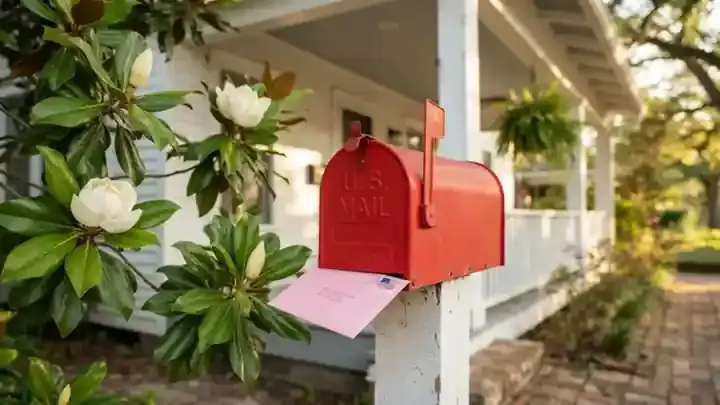
I told her the house still goes quiet at closing time, the way the branch did. But now there's a small noise in it at three o'clock every afternoon: the box fan on low, six little clouds of mint, three slow breaths toward the magnolia, and a glass of tea.
She wrote back in four days, which is fast for Lubbock: one line on a postcard of the Buddy Holly statue: "Told you. Now walk."
1 fl oz violet bottle · six sprays, three times a day · tell your clinician what's in it first
One more thing, and then I'll let you get back to your own porch. The violet bottle is on the wicker table right now, next to a glass of tea, and the box fan is humming in its particular key.
If you've been stopping on the fourth step and pretending to admire the ferns, you're not the only one. Tell your clinician about the step, keep an index card, and write somebody a real letter this week, on paper, with a stamp.
P.S. Birdie's cafeteria napkin is taped inside my kitchen cabinet now, next to my three rules, its ink faded from blue to gray: "the perfume of the chest"; if you have a Birdie in your life, write her tonight; if you are the Birdie, put something in the envelope.
P.P.S. Remember the order my clinician wrote on that first appointment card, walk, watch the air, come back: the spray isn't on that list at all, and it's the only thing on this page that comes in a bottle.
The full ingredient guide, with a note on each of the ten plants and on reading the advertising around this bottle, is linked at the foot of this page.